
Technology & Innovation
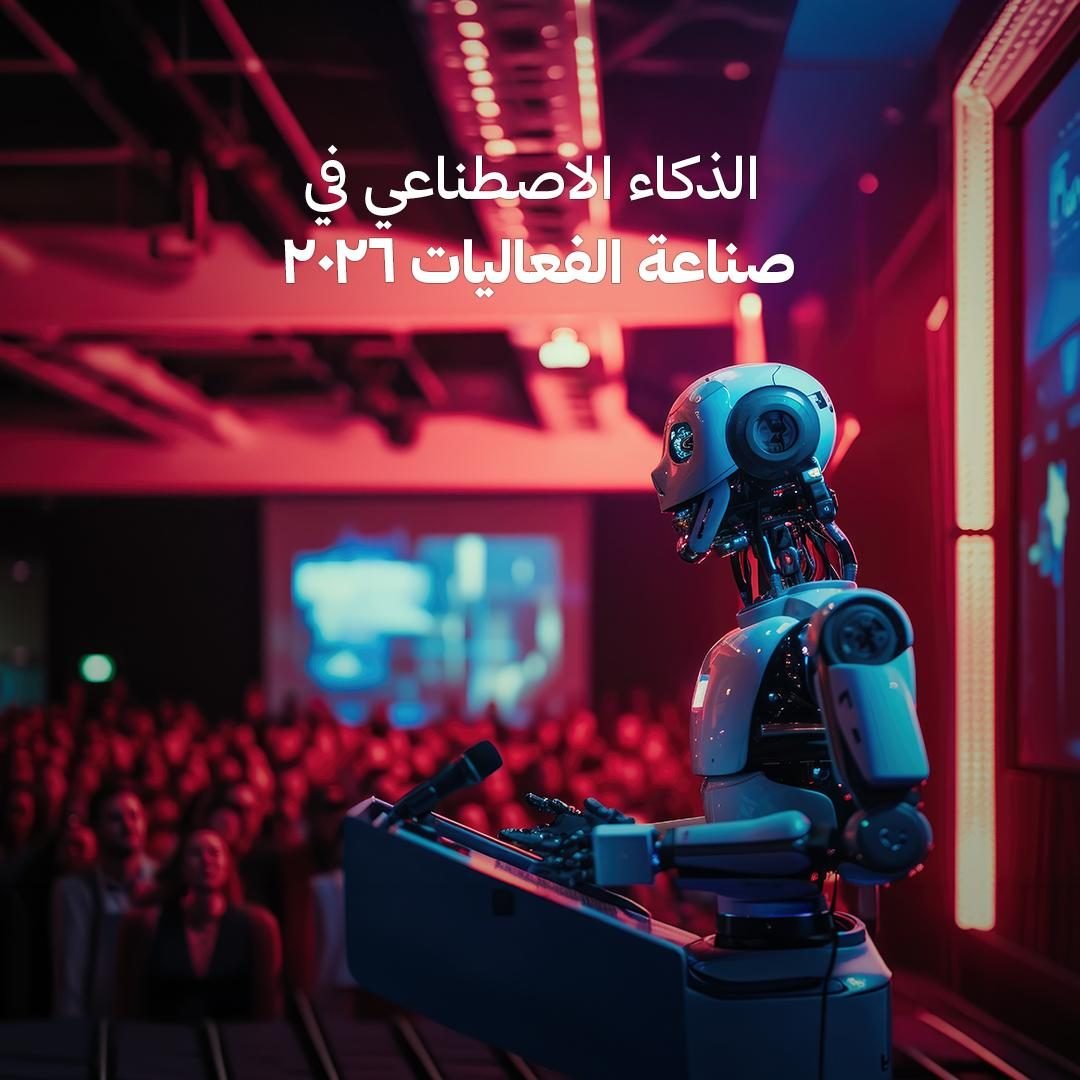
Artificial Intelligence in Event Management
How it's changing the rules of the game globally and in Saudi Arabia
Artificial intelligence in event management is no longer just a technical experiment or a tool for generating promotional copy and images; it has become a new operational layer that shapes how an event is designed, how audiences are understood, how attendance is managed, how experiences are personalized, and how ROI is measured.
By 2026, the real question is no longer: should we use AI in our event? It has become: where should we use it, and what safeguards ensure it adds real value without stripping the event of its human character?
For Saudi Arabia's events sector, this shift matters at an exceptional moment: the Kingdom is preparing to host Expo 2030 Riyadh from October 1, 2030 to March 31, 2031, with 197 participating countries and a target of more than 42 million visitors across a 6-million-square-meter site. These numbers make AI a strategic element for managing scale, diversity, and experience — not just a marketing add-on.
What Do We Mean by AI in Event Management?
AI in event management refers to using algorithms and intelligent models to analyze data, predict audience behavior, automate tasks, improve decisions, and deliver more personalized experiences before, during, and after an event.
This includes:
- Analyzing registration and ticketing data.
- Predicting attendance numbers and turnout rates.
- Personalizing invitations and content.
- Virtual assistants and automated responses.
- Real-time translation and transcription.
- Recommending relevant sessions and booths.
- Managing crowds and traffic flow.
- Analyzing engagement and measuring ROI.
- Generating copy, designs, and visual content.
- Linking attendee data to post-event outcomes.
Why Has AI Become Critical in 2026?
Modern events face growing challenges: rising audience expectations, multiplying channels, exploding data volumes, the need to measure outcomes, and diverse languages and cultures. An event is no longer judged by visitor count alone, but by the quality of the experience, the level of engagement, the opportunities it creates, and the value of the data it generates.
AI helps shift from a model of ‘we run an event and wait for the results’ to a more precise one: ‘we predict what the audience needs, design the experience accordingly, then measure its impact and keep improving it.’
This shift matters equally for exhibitions, conferences, forums, government and corporate events, and brand experiences.
AI Applications Before the Event
AI's real value starts well before the doors open.
Predicting Attendance
Smart models can analyze past registration data, audience behavior, campaign sources, geography, and event timing to predict expected attendance and no-show rates.
This helps make more accurate decisions about:
- Venue size.
- Number of registration points.
- Hospitality needs.
- Parking and transport.
- Staffing levels.
- Seating arrangements.
- Quantity of printed materials and gifts.
- Audience segmentation and message targeting.
Instead of sending one message to everyone, the audience can be segmented — prospects, partners, media, general enthusiasts, decision-makers, students — each with a tailored message:
- A message focused on business opportunities for investors.
- A message highlighting sessions for specialists.
- A message showcasing experiences for general visitors.
- A message emphasizing media exposure for sponsors.
- A message explaining educational benefits for students.
Creative Content Production
AI can support content teams in producing:
- Initial campaign concepts.
- Ad headlines.
- Short video scripts.
- Interview outlines.
- Speaker questions.
- Experience descriptions.
- First-pass translations.
- Multiple versions tailored to different platforms.
But human review remains essential, especially for content tied to national identity, government entities, sensitive data, and official messaging.
Scenario Design
AI can simulate the visitor journey before it happens, spotting congestion points, confusion, or weak wayfinding. Questions that can be tested include:
- What does the visitor see on arrival?
- How many steps to reach the booth?
- Where might queues form?
- Are directional messages clear?
- What's the fallback when an area fills up?
- How does the visitor discover events relevant to them?
AI Applications During the Event
During the event itself, AI becomes a real-time operational assistant.
Virtual Assistant
A smart assistant can answer frequently asked questions about:
- Session times.
- Booth locations.
- How to get there.
- Registration and check-in.
- Available services.
- Speakers.
- Transport schedules.
- General instructions.
Translation and Accessibility
Real-time translation, transcription, and smart summaries help expand who can benefit from an event — crucial for international conferences bringing together speakers and attendees from multiple languages. AI can also support:
- Live on-screen captions.
- Multilingual translation.
- Audio descriptions.
- Guidance for people with disabilities.
- Simplifying information by knowledge level.
Crowd Management
Attendance density across different zones can be analyzed, operational alerts sent to the team, and routes or entry times adjusted as needed. This doesn't mean unrestricted audience surveillance — purpose must be defined, privacy respected, and regulations and approved policies followed.
AI Applications After the Event
The event doesn't end when the program does. This is where AI helps turn it into reusable knowledge and marketing assets.
Sentiment and Engagement Analysis
Surveys, comments, and posts can be analyzed to identify:
- The most successful elements of the experience.
- Reasons for visitor dissatisfaction.
- The most popular sessions.
- Recurring operational issues.
- Brand perception.
- Topics worth expanding on in the future.
Reporting
AI can speed up post-event reporting by pulling data from registration, the app, surveys, and social platforms and turning it into understandable metrics. But a good report doesn't stop at ‘the event was a success’ — it answers specific questions:
- What was achieved?
- What wasn't achieved?
- Why?
- What's the value of the results?
- What should change for the next edition?
Content Recycling
Session recordings can be turned into:
- Executive summaries.
- Short clips.
- Social media quotes.
- Specialized articles.
- Email newsletters.
- Q&As.
- Training materials.
This turns the conference into a content source whose impact extends for weeks or months after the event ends.
Sky Expo's Six Initiatives
Building on Sky Expo's position as an organizer and designer of event experiences, AI can be translated into six practical initiatives that serve the client, the visitor, and the organizer.
Initiative One: The Event Intelligence Lab
This lab analyzes event objectives, audience, budget, and venue to deliver an early picture of the experience, operational needs, and potential risks. Expected outputs:
- A clear objective definition.
- An audience map.
- Attendance scenarios.
- A risk list.
- Initial venue and experience recommendations.
- Measurable performance indicators.
Initiative Two: The Smart Visitor Experience Platform
A digital platform that accompanies the visitor before, during, and after the event, offering registration, a personal schedule, maps, alerts, recommendations, and communication with exhibitors or speakers. Its value lies in making the visitor experience smoother and generating better data on behavior and interests.
Initiative Three: The Exhibitor–Buyer Matching Engine
In B2B exhibitions, value doesn't lie in visitor numbers alone but in the quality of relationships formed. A smart engine can be built to match buyer needs with exhibitor solutions and suggest priority meetings. This helps:
- Reduce mismatched meetings.
- Improve lead quality.
- Boost exhibitor ROI.
- Ease post-event follow-up on opportunities.
Initiative Four: The Predictive Operations Room
An operations room using live dashboards to analyze registration, entry, density, service metrics, and zone performance. It gives the operations team the ability to:
- Spot congestion early.
- Redeploy staff.
- Adjust flows.
- Track faults.
- Document decisions.
- Improve response speed.
Initiative Five: The Smart Content Studio
This studio turns raw material into multi-use content while preserving the brand voice and identity guidelines. It can produce:
- Pre-event content.
- Live coverage.
- Short interviews.
- Session summaries.
- Post-event clips.
- Visual reports for sponsors or clients.
Creative oversight and final editing should remain in human hands — AI is a production tool, not a substitute for cultural and strategic understanding.
Initiative Six: The Impact and Strategic Intelligence Report
After an event ends, Sky Expo doesn't just hand over a numbers report — it can build a strategic reading of what the data means for the next edition. The report includes:
- Attendance and engagement indicators.
- Audience satisfaction analysis.
- Sponsor and exhibitor performance.
- The most impactful experiences.
- Improvement opportunities.
- Future recommendations.
- Performance versus original objectives.
How Do You Measure AI's ROI?
AI's impact can be measured through practical indicators, such as:
- Reduced registration and check-in time.
- Lower average response time to inquiries.
- Better attendance distribution across the venue.
- Higher attendance at relevant sessions.
- More qualified meetings.
- Less waste in materials and hospitality.
- Higher visitor satisfaction.
- Faster final report turnaround.
- Higher lead conversion rate.
- Fewer operational errors.
The most important benchmark is comparing these indicators against a baseline before adopting the technology. If visitor experience, operational efficiency, or commercial return don't improve, AI becomes a showcase rather than a strategy.
Sky Expo's Role Going Forward
Sky Expo aims to treat AI as a means of raising the quality of planning and execution — not a replacement for human expertise. Real value emerges when data meets audience understanding, technology meets creativity, and analysis meets operational capability. Through these six initiatives, Sky Expo can offer a practical model that helps clients:
- Make data-driven decisions.
- Design a clearer visitor journey.
- Manage crowds and resources efficiently.
- Increase the value of sponsorship and participation.
- Produce content that lives on after the event.
- Measure event impact clearly.
- Prepare for major national and international events.
FAQ
Will AI replace event organizers?
No. AI will change the nature of the work, but it won't eliminate the need for a project manager, a designer, a production team, or visitor-experience experts. Its core role is to support decisions, automate tasks, and improve forecasting.
What's the first sensible AI use case for a small event?
Start with quick-return tasks: a virtual assistant, registration analysis, message personalization, survey summarization, and post-event content production.
Is AI only suitable for exhibitions and conferences?
No. It can be used in product launches, government events, internal corporate events, festivals, sporting experiences, cultural events, and brand experiences.
How do you protect event visitor data?
By defining necessary data, obtaining proper consent, restricting access, securing systems, clarifying usage policy, and setting alternatives that don't rely on excessive data collection.
What does AI have to do with Expo 2030 Riyadh?
AI can support managing large visitor volumes, multilingual needs, navigation, recommendations, experience analysis, sustainability, and coordination among participants. Expo 2030 Riyadh hosts the world under the theme ‘The Era of Change,’ with a focus on transformative technology, sustainable solutions, and human prosperity.
Conclusion
AI in event management isn't a passing wave — it's a shift in how we think, plan, operate, and measure. The gap between organizations that benefit from it and those that merely showcase it will come down to their ability to tie the technology to a clear goal, a human experience, and a measurable outcome.
Globally, the United States offers a commercial-growth model, China an operational-scale model, and Japan a human-centered technology model. Saudi Arabia has the opportunity to build its own model, drawing on these trends and the strong national momentum in the events sector, all the way to Expo 2030 Riyadh.
In this landscape, it's not enough for an event company to simply be able to execute an event; it must be able to understand data, design experiences, manage technology, and turn every event into knowledge that can be built upon. That is the role Sky Expo is working to establish: smarter events, more human experiences, and measurable impact.